
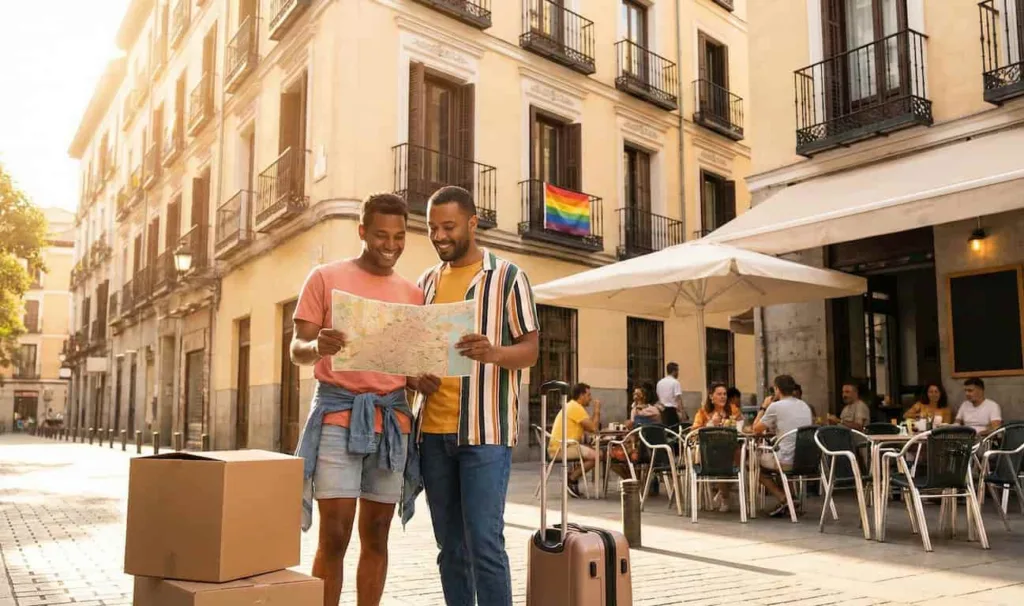
So, you’re thinking about moving to Madrid. Congratulations—you’ve just chosen one of the safest, sunniest, and most unapologetically LGBTQ+ friendly capitals in the world.
But here is the reality check: visiting Madrid for Pride (MADO 2026) is a completely different experience from actually living here. Navigating the real estate jungle, figuring out which streets are too noisy, and finding your community as an expat requires insider knowledge. We’ve turned off the digital noise to give you the brutal, honest, and definitive guide to relocating to Madrid.
1. The Neighborhood Showdown: Where to drop your bags
Madrid is a collection of villages. While the whole city is highly tolerant, the “Justicia” district is the historical gay epicenter. But administratively, this area is split by an invisible border into two very different lifestyles.
🏳️🌈 Chueca (The Beating Heart)
The Vibe: Vibrant, loud, colorful, and social. You step out of your door and you’re in the middle of a terrace.
The Crowd: Young professionals, nightlife lovers, and tourists.
⚠️ The Warning: Do NOT rent a first-floor apartment on Pelayo or Augusto Figueroa streets unless it has triple-glazed windows. You will never sleep.
🎩 Salesas (The Chic Older Sister)
The Vibe: “Quiet Luxury”. 19th-century Parisian-style architecture, specialty coffee, and art galleries.
The Crowd: High-earning expats, DINK couples (Double Income, No Kids), and the established queer crowd.
✨ The Secret: It’s only two streets away from Chueca, giving you the perfect balance of peace and proximity.
*Honorable Mentions: If you prefer an indie/alternative queer scene, look into Malasaña or Lavapiés. They are grittier, highly artistic, and very popular among the younger international crowd.*
2. The Real Estate Jungle (What you need to know)
Finding a good long-term rental in central Madrid right now is an extreme sport. The main app, Idealista, is highly competitive and the best apartments in the Justicia district often circulate “off-market” through word-of-mouth.
- ✔️ Standard Requirements: Landlords will ask for a Spanish work contract. If you are a digital nomad or freelancer, you will likely need to offer 6 months of rent upfront to secure a place.
- ✔️ The Air Conditioning Rule: Never rent a place without AC. Madrid reaches 40°C (104°F) in July.
- ✔️ The “Interior” Trap: In Spain, an “interior” apartment means its windows face an inner courtyard. They are much quieter, but make sure to visit in person to check if it gets any natural sunlight.
3. Cost of Living in Central Madrid (2026)
Madrid is no longer the “cheap” European capital it was a decade ago, but it still offers an incredibly high quality of life compared to London, Paris, or New York. Here is a realistic monthly breakdown for a single expat living well in the center:
- 🏠 Rent (1-Bedroom in Chueca/Salesas): €1,300 – €2,000+ (Utilities usually add €100-€150).
- ☕ Specialty Coffee & Brunch: A flat white at our favorite spot, Coco Social House, is around €3. A full aesthetic brunch is €15-€20.
- 🏋️ Boutique Gyms: €60 – €120/month.
- 🍷 Night out: A caña (draft beer) in a traditional bar is €2.50. A premium cocktail in a nice lounge is €12-€14.
4. Making Friends: Don’t do it alone
The hardest part of moving abroad isn’t the bureaucracy; it’s building your chosen family from scratch. Madrid is a very social city, but breaking into local friend groups can take time.
🥂 New in Town? Join the “Tribu”
We believe in logging off dating apps and reclaiming the old habit of sharing a table. At Pride Chueca, we host a private Telegram community for locals and expats.
Use it to ask questions about internet providers, find out which terrace we are working from today, or join our safe Sapphic Tribe meetups. No spam, just real people.
Moving to Madrid is the best decision you’ll ever make. The streets of Chueca and Salesas are waiting to become the backdrop of your next chapter. Pack your bags, practice your Spanish, and we’ll see you at the plaza!